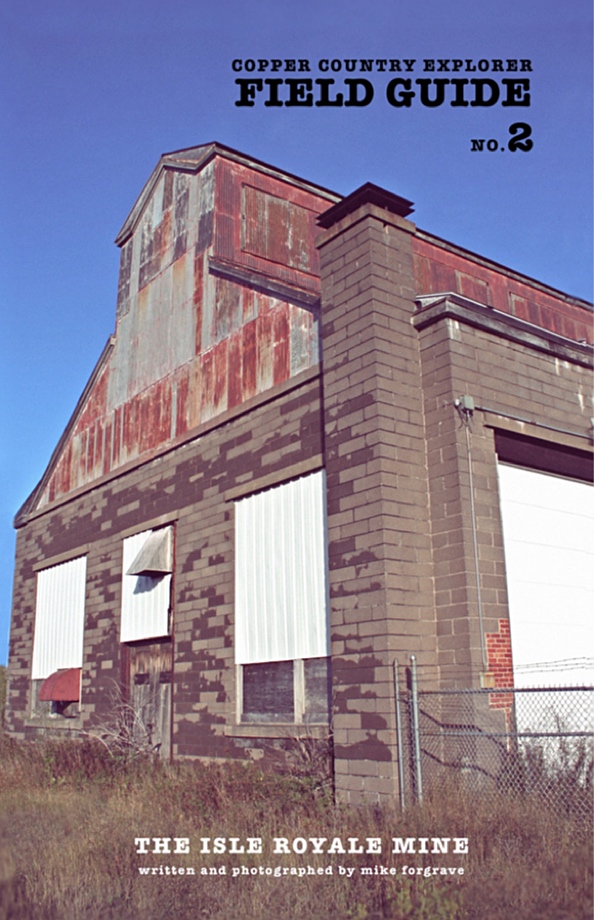
 For a quarter century the Isle Royale Mine was the king of the mountain, sitting high atop the hill overlooking Houghton and the Portage valley. Its line of rock houses and soaring piles of poor rock stood as monuments to a prosperous and industrious time. Yet as was always the case across the copper empire, success was fleeting and before long the great Isle Royale succumbed to the march of progress – its monuments dismantled or hauled away as road fill. While its shaft houses and rock piles may be no more, the old mine managed to leave its mark on the landscape above Houghton – in the scattered ruins found scattered alongside the road.
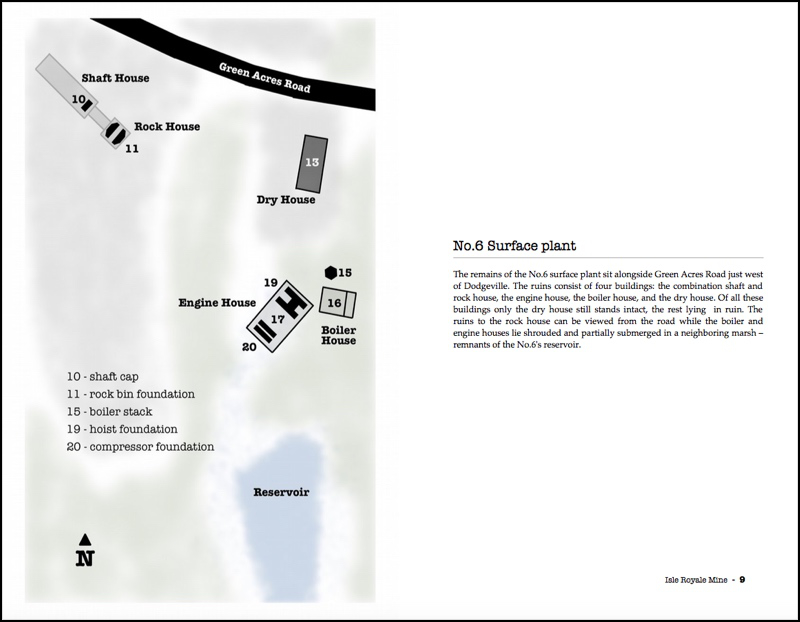
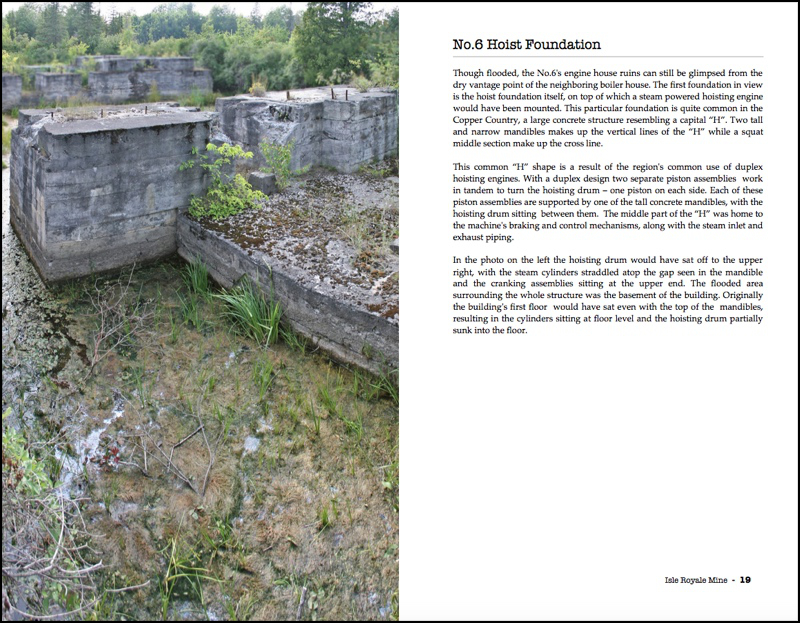
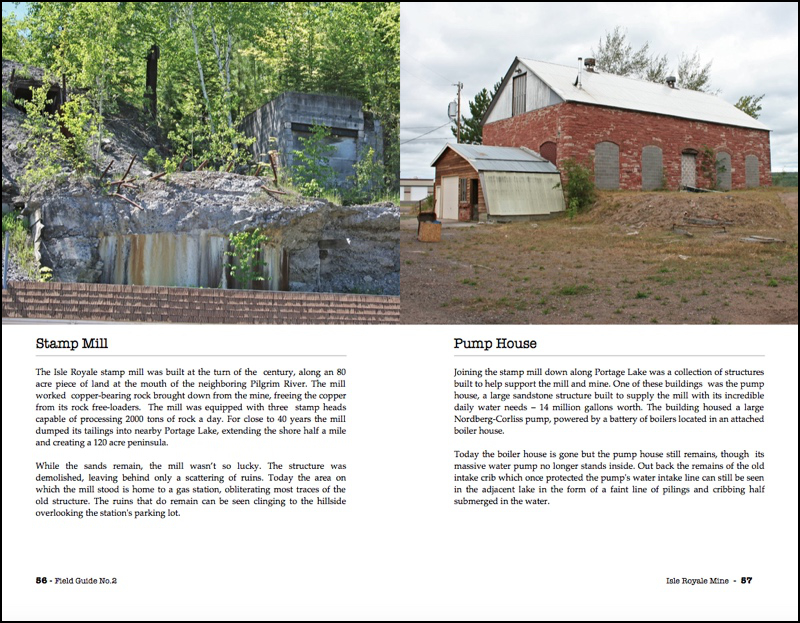
The Isle Royale Mine Field Guide helps you find and identify these scattered remains -learning what purpose they once served when the mine was at its height. Shaft by shaft the Guide takes you on a tour of the ruins that remains along with the few intact buildings that remain. Over 30 ruins are included along with a look at the mine’s railroad, mill, and dock remnants. Each entry is accompanied with full color photographs, brief histories and locations. Over a half dozen detailed ruin maps are also included, illustrating the location and purpose of the ruins that remain. (67 pages, 5.5″x8.5″, 16.2MB)
Order Your Copy Today
Each Copper Country Explorer Field Guide is available in two formats, both as a ePub digital download and as a full-color printed paperback. The ePub versions have been designed specifically for use on small-screen mobile devices, allowing them to be easily used while on-the-go on your phone or tablet. The printed versions are trade paperback size (5.5″ x 8.5″), printed in full color with perfect bound binding. Choose your format of choice from the options below: